
RESOURCES
What You Should Know about Prostate Screenings
Prostate cancer is the second most common form of cancer in men. One in nine men is diagnosed with prostate cancer in their lifetime, and for African-Americans, it’s one in six. This is why proactive screening of the prostate is so important. Busch Center’s location is a strategic one. As a state, Georgia ranks among the highest in the nation for incidents of prostate cancer, and we’re determined to see men make regular prostate...

5 Exercise Tips for a Healthy Prostate
Exercise is shown to benefit physical health in numerous ways, and now there is a growing body of research showing regular exercise helps prevent prostate issues such as benign prostatic hyperplasia (BPH), prostate cancer, and erectile dysfunction.The Health Professionals Follow-up Study found that men who exercised regularly were less likely to suffer from BPH and were 20% less likely to have erectile dysfunction. But how much exercise, and...

Prostate Cancer Resources
Receiving a cancer diagnosis can be overwhelming--no one likes to hear the big “C.” That’s why at Busch Center we want to go the extra mile to take care of mind and heart as well as your body. Here’s a list of resources you can use to find more information and support. Websites US TOO International, Inc. This site offers a wealth of information in order to help men make decisions on prostate cancer testing, surveillance, and treatment. US...

The 4 Causes of an Enlarged Prostate
It is normal for a prostate to become enlarged as a man ages. The prostate is approximately the size of a walnut in younger men but can grow to be much larger as they get older. An enlarged prostate can cause no visible symptoms but will eventually impact urinary and erectile functions if not properly treated. There are many reasons a prostate gets enlarged, and most of them aren’t cancerous. Here are the most common: Benign Prostatic...

What Are the Signs of an Enlarged Prostate?
The most common prostate-related issue for men over 50 is prostate enlargement. By age 60, over half of men will have Benign Prostate Hyperplasia (BPH), or non-cancerous prostate enlargement. By age 85, that number increases to 90%. Causes The prostate is approximately the size of a walnut in younger men but it can grow to be much larger when the cells of the prostate gland begin to multiply as they get older. An enlarged prostate can cause no...

The Basics of Prostate Health
What Is the Prostate? The Prostate is a gland in the male body located just below the bladder in front of the rectum. It also wraps around the upper part of the urethra, the tube that carries urine from the bladder out of the body. The prostate’s job is to produce fluid that becomes part of semen. This means any problems with it can affect urination and sexual function. Prostate cells also secrete various proteins into the bloodstream, one of...

Pioneering Non-Invasive Prostate Cancer Treatment Using the Latest Tech in MRI Guidance
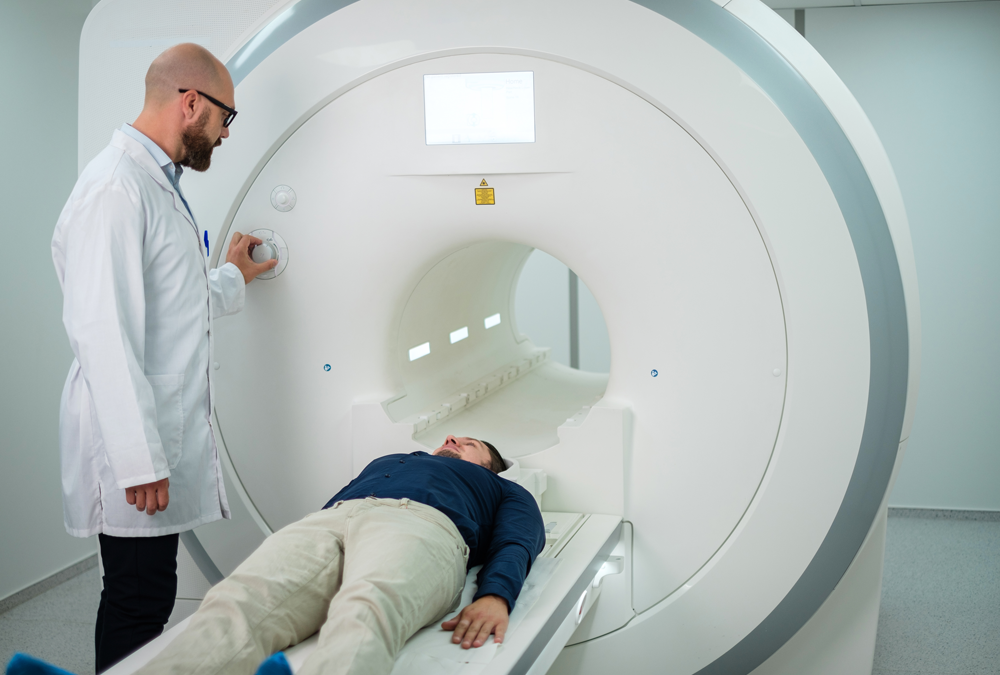
Having the right technology to perform the TULSA procedure is crucial to detecting all the cancerous tissue in the prostate and selectively treating it with laser ablation. When choosing the MRI equipment needed for the Busch Center, Dr. Busch turned to Profound Medical and the "Healthineers" at Siemens to provide the best option in MRI and robotically-controlled ultrasound technology--a scanner providing "gradient imaging," a feature necessary...

The Greatest Christmas Gift of All — Time and Hope
Dear Dr. Joe and Kathy Busch, We woke up this morning to snow blanketing our home, bestowing a White Christmas wonderland on us for the first time in ten years. What a gift! Gazing out at this unexpected gift of nature, I thought of all those souls that are less fortunate and prayed that they might receive the gift of peace and contentment promised by all the collective good will that comes with this season. Last week our area had the...
Medical Studies
Prostate Cancer Treatment in the Extreme Apex: Preservation of Continence With Robotic-Assisted MRI-Guided TULSA
Cureus
MRI-guided TULSA is a safe and effective treatment for prostate cancer involving the extreme apical region. Despite the technical challenges posed by tumors abutting or partially involving the external urinary sphincter, carefully planned and controlled ablation can achieve excellent oncologic outcomes.
MRI-Guided TULSA Shows Faster Recovery Than Robotic Prostatectomy in CAPTAIN Trial
Medscape Medical News
MRI-guided transurethral ultrasound ablation (TULSA) resulted in significantly faster recovery, less perioperative morbidity, and better early functional outcomes than robotic radical prostatectomy in men with intermediate-risk prostate cancer, according to early results from the randomized CAPTAIN trial.
Retrospective Analysis of MRI-guided Transurethral Ultrasound Ablation (TULSA) in Prostate Cancer Lesions at the Extreme Apex
RSNA
This retrospective analysis demonstrates promising safety and efficacy of TULSA in patients with extreme apical lesions, preserving urinary continence despite ablation near the external sphincter.
Personalized Treatment for Patients with Prostate Cancer Using MRI-guided TULSA
TULSA is a new technology which has demonstrated promising early oncological results with a well-tolerated safety profile. As MRI is already embedded within TULSA, used both to guide, plan, and monitor treatment, TULSA is well-positioned to address the changing landscape of Prostate Cancer disease management.